
The Cost of Performance Without Trust in Modern Organizations

In today's competitive landscape, the pressure to deliver results is relentless. Leaders are expected to drive performance, meet targets, and steer their organizations toward continuous growth. But what happens when the pursuit of performance comes at the expense of trust? While a culture of accountability and high standards is essential, a singular focus on short-term gains can create a toxic environment where trust erodes, engagement plummets, and long-term performance stalls.
This is the paradox of performance without trust: a leadership approach that appears strong on the surface but ultimately undermines the very foundation of sustainable success. Even with a "strong" leader at the helm, organizations find themselves hitting a wall, unable to innovate, adapt, or retain their best people. The culprit, more often than not, is a deficit of trust that quietly sabotages the organization's potential.
I have seen this pattern play out across industries and geographies. It rarely announces itself. By the time the damage is visible in the numbers, the cultural cost has already been paid. This blog explores why it happens, what data tells us, and what it takes to lead differently. You can learn more about the philosophy behind our work on Masen Strategies homepage.
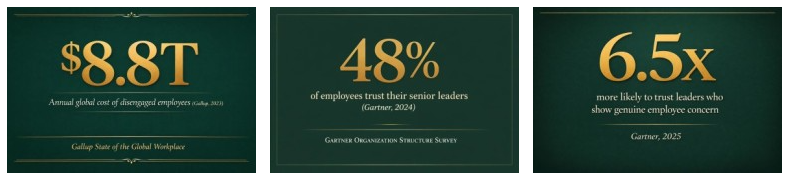
The Slow Erosion of Trust: Short-Term Gains vs. Long-Term Damage
Trust is not a soft skill; it is a hard asset. It is the currency of leadership, and when it is devalued, the entire organizational system suffers. The erosion of trust is often a slow, insidious process. It begins with small, seemingly insignificant actions that accumulate over time, creating a culture of fear, uncertainty, and psychological insecurity. As Dennis Reina, co-founder of Reina Trust Building, notes, “Most trust breakdowns aren’t dramatic betrayals; our research shows that 90% of erosion comes from small, unintentional behaviors that accumulate over time.” [1]
Leaders who prioritize short-term results above all else often exhibit behaviors that, while seemingly effective in the moment, chip away at the bedrock of trust. These can include:
Withholding information: A lack of transparency about organizational changes, performance metrics, or strategic decisions can breed suspicion and anxiety. Gartner research reveals that employees are 20% less likely to trust senior leaders when they believe important information is being concealed. [2]
Inconsistent actions and messaging: When a leader’s words and actions don’t align, it creates confusion and cynicism. This inconsistency undermines credibility and makes it difficult for employees to feel secure in their roles.
A lack of psychological safety: In a low-trust environment, employees are less likely to take risks, voice dissenting opinions, or admit mistakes for fear of retribution. This stifles innovation and prevents the organization from learning and adapting.
The long-term damage of this trust erosion is significant. While a company might see a temporary spike in productivity or hit its quarterly targets, it comes at a steep price. A 2023 Gallup report found that low employee engagement, a direct consequence of low trust, costs the global economy an estimated $8.8 trillion in lost productivity. [3] This staggering figure highlights the tangible financial impact of a disengaged workforce.
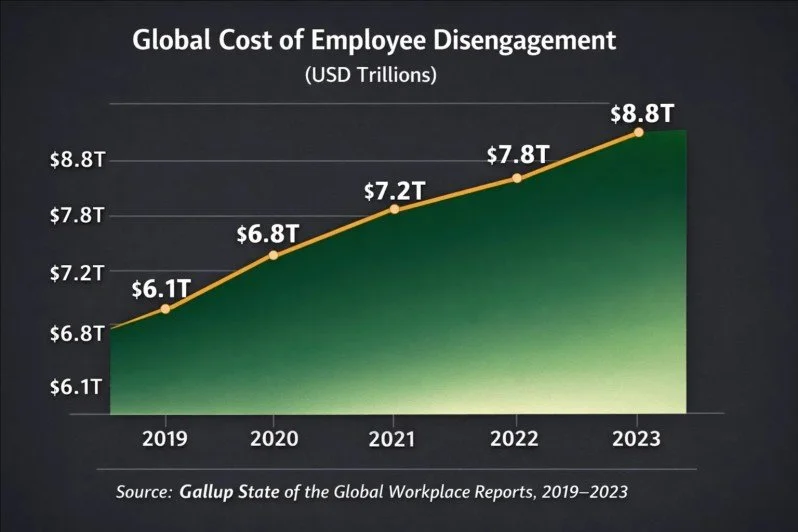
The Hidden Costs of Low Trust:
Increased employee turnover and associated hiring costs
Decreased productivity and lower quality of work
Reduced innovation and adaptability
Higher levels of stress and burnout
Damage to the organization’s reputation and brand
Why Results Stall, Even with "Strong" Leaders
Many organizations believe that a hard-charging, results-driven leader is the key to success. However, when that leadership style is not balanced with empathy, transparency, and a genuine commitment to building trust, it can become a liability. A “strong” leader who operates in a low-trust environment may find that their strategies and initiatives fail to gain traction, for several reasons:
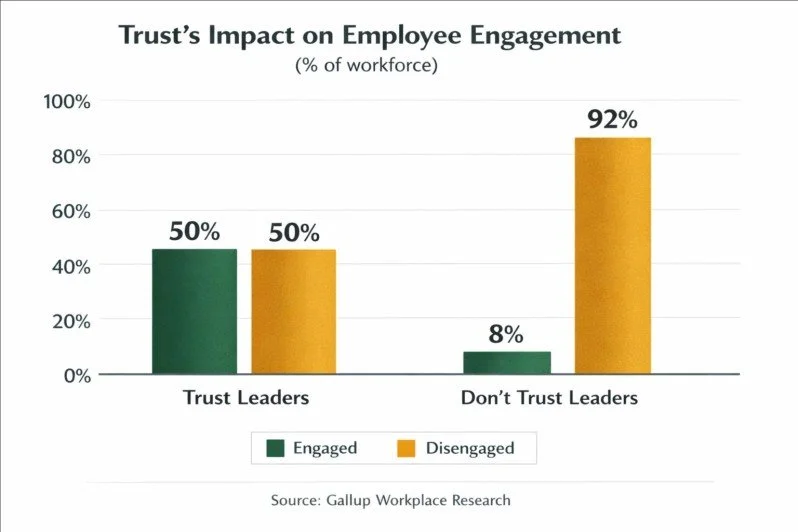
Disengagement and Apathy: When employees do not trust their leaders, they become disengaged from their work and the organization’s mission. Gallup’s research consistently shows a strong correlation between trust and engagement. When followers strongly agree that they trust their leaders, one in two are engaged. When they don’t, that number plummets to a dismal one in twelve. [4] Disengaged employees do the bare minimum to get by, lacking the passion and commitment to go the extra mile
Lack of Collaboration and Information Sharing: In a low-trust culture, teams and departments become siloed. Information is hoarded, and collaboration is replaced by self-preservation. This makes it impossible to solve complex problems or execute cross-functional initiatives effectively.
Resistance to Change: Employees who distrust leadership are naturally resistant to change. They view new initiatives with suspicion, assuming the worst about the motivations behind them. This resistance can derail even the most well-conceived strategic plans.
Ultimately, a leadership approach that relies on fear and control is unsustainable. As an article in Forbes aptly puts it, “Fear might get short-term compliance, but trust is a more important driver of long-term performance.” [5] True strength in leadership lies not in the ability to command, but in the ability to inspire and empower. And that begins with building a foundation of trust.
Building a High-Trust, High-Performance Culture
Rebuilding trust is not an easy task, but it is an essential one for any organization that aspires to long-term success. It requires a conscious and consistent effort from leaders at all levels. At Masen Strategies, we believe thathuman-centered leadershipis the key to creating a culture where both people and performance can thrive. This approach is built on the principles of clarity, alignment, and, most importantly, trust.
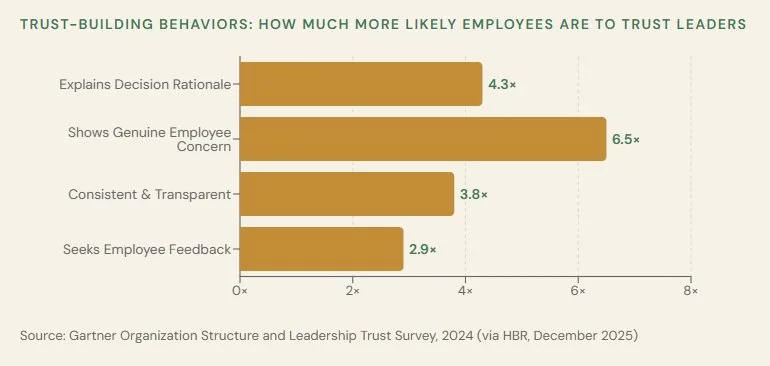
Leaders can begin to rebuild trust by focusing on the following key areas:
Lead with Transparency: Share information openly and honestly, even when it's difficult. Explain the "why" behind decisions and be forthcoming about challenges and setbacks.
Demonstrate Consistency: Ensure that your words and actions are aligned. Follow through on commitments and hold yourself and others accountable to the same high standards.
Foster Psychological Safety: Create an environment where employees feel safe to speak up, ask questions, and take calculated risks without fear of punishment or humiliation.
Invest in Relationships: Take the time to get to know your employees as individuals. Show genuine care and concern for their well-being and professional development.
By making a deliberate choice to prioritize trust, leaders can unlock the full potential of their people and their organizations. The result is not just a more engaged and productive workforce, but a more resilient and adaptable organization that is built to last, grow revenue and increase customer satisfaction.

FAQs:
-
While many factors can contribute to the erosion of trust, a lack of transparency and inconsistent behavior from leaders are among the most damaging. When employees feel that information is being withheld or that leaders' actions don't match their words, it creates a sense of uncertainty and suspicion that is toxic to a healthy work environment. Research shows that 90% of trust erosion comes from small, unintentional behaviors that accumulate over time—not from dramatic betrayals.
-
Yes, it is possible for a company to achieve short-term success through a relentless focus on performance, even in a low-trust environment. However, this success is often unsustainable. The hidden costs of low trust, such as high employee turnover, disengagement, and a lack of innovation, will eventually catch up with the organization and undermine its long-term viability. Many organizations discover this too late—after they've lost their best talent and their competitive edge.
-
Rebuilding trust takes time and a consistent, demonstrated commitment to change. A leader can start by openly acknowledging the trust deficit, taking responsibility for their role in creating it, and then consistently demonstrating trustworthy behaviors such as transparency, honesty, and follow-through. It is a process that requires both humility and a genuine desire to create a more positive and productive work environment. The key is consistency—trust is rebuilt through repeated, aligned actions over time.
-
Accountability is about clear expectations, transparent feedback, and shared responsibility for outcomes. Fear-based management relies on punishment, control, and the threat of consequences. While both may drive short-term compliance, accountability creates engagement and ownership, whereas fear creates disengagement and defensive behaviors. Leaders who build trust use accountability as a tool for growth, not punishment.
-
Signs of low trust include high employee turnover, low engagement scores, siloed teams that don't collaborate, resistance to change initiatives, and high levels of stress or burnout. Employees may also be reluctant to speak up in meetings, share ideas, or admit mistakes. If you're seeing these patterns, it's likely that trust is eroding. The good news is that trust can be rebuilt with intentional leadership and consistent action.
-
Yes, trust can be measured through employee engagement surveys, pulse surveys, and one-on-one conversations. Look for improvements in survey scores related to leadership transparency, psychological safety, and confidence in leadership. You can also track indirect indicators like retention rates, internal promotion rates, and voluntary turnover. Progress in rebuilding trust is often gradual, but consistent improvements in these metrics indicate that your efforts are working.
Is Your Organization Paying the Hidden Price of Low Trust?
If your organization is struggling to balance the demands of performance with the need for a high-trust culture, we're here to help. At Masen Strategies, we specialize in building human-centered leadership practices that drive both engagement and results.
References
[1] Forbes, "Trust Isn’t Soft: Why Leaders Must Make It Behavioral" [2] Harvard Business Review, "Most Employees Don’t Trust Their Leaders. Here’s What to Do About It." [3] Gallup, "Employee Engagement Strategies: Fixing the World's $8.8 Trillion Workplace Problem" [4] Gallup, "How to Build Trust in the Workplace" [5] Forbes, "Performance Without Fear: Rethinking Accountability And Growth"

Masen Strategies is a founder-led advisory helping leaders and organizations strengthen clarity, alignment, and execution through a human centered leadership approach.
We work with senior leaders, leadership teams, and growing organizations navigating complexity, pressure, or change. Our work is practical, experience-led, and focused on helping leaders perform without losing trust, judgment, or momentum.